Health
Kerala SMA row: Generic risdiplam in SAT Hospital carries 'clinical trial' label
Parents of children on the state's free spinal muscular atrophy programme are asking whether the cheaper Natsmart switch was cleared, tested and explained to them.
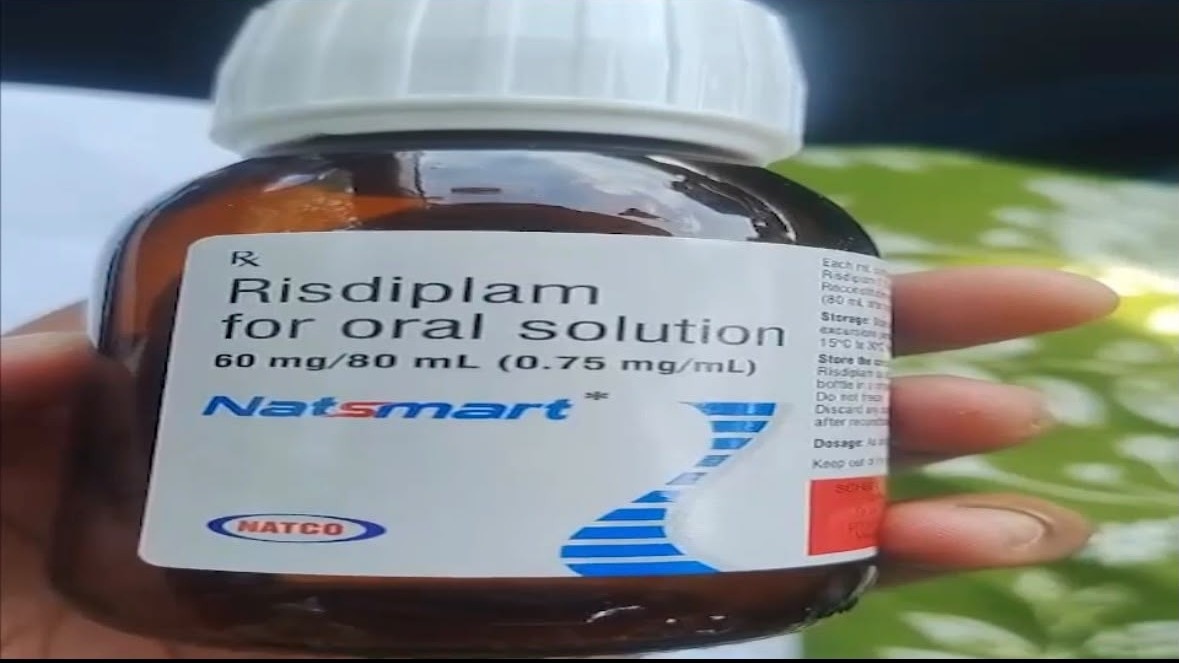
A Thiruvananthapuram government hospital's switch to a cheaper generic spinal muscular atrophy (SMA) drug has set off a row in Kerala. Packs handed out at Sree Avittom Thirunal (SAT) Hospital this week reportedly carried the words "Physician Sample" and "For Clinical Trials Only".
The hospital began distributing Natco Pharma's risdiplam generic, Natsmart, replacing Roche's Evrysdi, which children in the programme have received since 2022. Parents saw the labels and feared their children were being given an experimental product.
Opposition Leader and former chief minister Pinarayi Vijayan raised the issue on October 20. The questions now centre on three points: whether the generic has the required regulatory approval, what evidence shows it works as well as the original (bioequivalence), and whether families were properly informed and consented.
The stakes are high. SMA is a rare genetic disorder that progressively weakens muscles and can be fatal in severe forms. Risdiplam does not cure it, but it helps the body make more survival motor neuron protein and can slow progression, most effectively when started early.
Kerala is the only Indian state offering free SMA therapy, and about 200 patients are estimated to benefit. The scheme was folded into the Kerala United Against Rare Diseases (KARE) programme in 2023, covering children under 12 through a hub-and-spoke model and a patient registry.
The cost gap explains the switch. Imported Evrysdi could cost roughly Rs 72 lakh a year for the first two years and Rs 56 lakh annually after that, though Kerala's negotiated price was never disclosed. After the Delhi High Court allowed Natco to make a generic last year, the company launched Natsmart at Rs 15,900 a bottle, about 97% below the Rs 6.2 lakh the original cost at its peak.
The row is a test of whether cheaper access can be delivered without eroding trust. The source material does not carry a response from the hospital or the state health department on the labelling or the approval status.
Read the original report: India Today.